
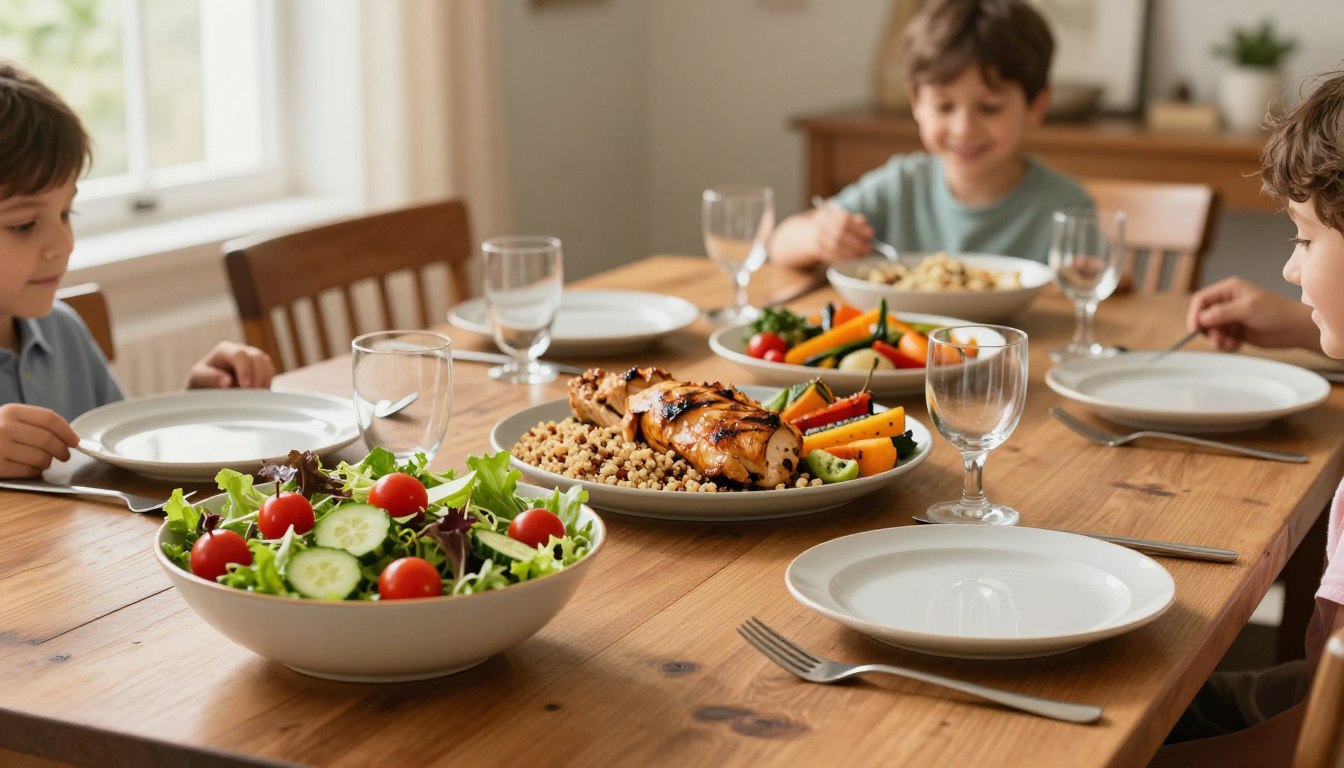
Did you know that the average American eats nearly one in five food portions in their vehicle? This startling reality highlights the intense pressure many parents face when trying to keep a balanced routine at home. Balancing a career and school activities makes it hard to focus on the kitchen.
Finding time for healthy eating for families often feels like a secondary job in our fast-paced society. Between long work hours and school events, the dinner table is frequently ignored. You deserve a way to feed your loved ones well without sacrificing your entire evening to the stove.
Making simple changes can transform how your household approaches dinner time. You can create delicious options that nourish everyone effectively. Consistency is the key to success. Reclaiming these moments ensures everyone stays energized throughout the week.
Key Takeaways
- Plan your weekly menu every Sunday to reduce stress.
- Use pre-cut vegetables to speed up preparation.
- Try batch cooking on weekends to save time later.
- Keep simple pantry staples like grains and beans available.
- Involve your children in food prep to teach skills.
- Focus on whole ingredients rather than processed options.
Understanding the Foundation of Family Nutrition
A well-balanced diet is the cornerstone of a healthy family, influencing everything from energy levels to long-term health outcomes. Ensuring that your family consumes a variety of nutritious foods is essential for maintaining their overall health and wellbeing.
Nutrition is a complex subject, and understanding what constitutes a healthy diet can be overwhelming, especially for busy families. However, by breaking down the basics of family nutrition, you can make informed decisions about the food your family eats.
What Makes a Meal Truly Nutritious
A nutritious meal is one that provides a balance of essential nutrients, including proteins, carbohydrates, fats, vitamins, and minerals. Incorporating a variety of foods into your meals is key to achieving this balance.
For families, it’s about finding the right mix of foods that are not only nutritious but also appealing to both children and adults. This can include lean proteins like chicken and fish, whole grains such as brown rice and quinoa, and a range of colorful vegetables and fruits.
| Nutrient | Food Sources | Benefits |
|---|---|---|
| Protein | Lean meats, fish, eggs, beans | Builds and repairs muscles |
| Whole Grains | Brown rice, quinoa, whole wheat bread | Provides fiber and essential minerals |
| Vegetables | Leafy greens, broccoli, carrots | Rich in vitamins and antioxidants |
Common Nutrition Myths for Families
There are many misconceptions surrounding nutrition that can affect how families approach meal planning. One common myth is that healthy eating is too expensive or time-consuming.
While it’s true that some healthy foods can be pricey, planning meals around seasonal produce and buying in bulk can be cost-effective. Additionally, simple, nutritious meals like stir-fries or one-pot dishes can be prepared quickly.
Another myth is that children won’t eat healthy foods. However, involving kids in the cooking process and introducing a variety of foods early on can encourage healthier eating habits.
How to Plan Nutritious Meals for Families Successfully
Successful family meal planning involves understanding your family’s nutritional requirements and preferences. It’s about creating a balance between healthy eating and the practicalities of family life. By following a few simple steps, you can develop a meal planning routine that works for you and your family.
Step 1: Assess Your Family’s Nutritional Needs
Understanding the nutritional needs of your family members is the first step towards planning healthy meals. This involves considering factors such as age, health status, and dietary preferences or restrictions. For instance, children and teenagers have different nutritional needs compared to adults, and individuals with certain health conditions may require specific diets.
Nutritional Needs by Age:
| Age Group | Nutritional Needs |
|---|---|
| Children (4-8 years) | Require balanced diets rich in calcium, iron, and fiber for growth and development. |
| Teenagers (9-18 years) | Need increased amounts of protein, calcium, and iron to support growth spurts. |
| Adults | Benefit from a balanced diet that maintains their health and supports their activity level. |
Step 2: Create a Balanced Weekly Menu
Once you have assessed your family’s nutritional needs, the next step is to create a balanced weekly menu. This involves planning meals that are not only nutritious but also appealing to everyone in the family. Consider incorporating a variety of foods including fruits, vegetables, whole grains, lean proteins, and healthy fats.
Tips for a Balanced Menu:
- Include a variety of colors on your plate to ensure a range of vitamins and minerals.
- Choose whole grains over refined grains.
- Select lean protein sources and a variety of vegetables.
Step 3: Build a Master Grocery List
A well-planned grocery list is essential for efficient meal preparation. Based on your weekly menu, list down all the ingredients you need. Organize your list by categories such as produce, dairy, meats, and pantry items to make shopping easier.
Grocery List Categories:
- Produce (fruits and vegetables)
- Dairy and eggs
- Meats, poultry, and seafood
- Pantry items (grains, canned goods, etc.)
Step 4: Involve Your Children in the Planning Process
Involving your children in meal planning can make them more excited about trying new foods and eating together as a family. Let them help with meal planning and grocery shopping. You can ask them to pick a new fruit or vegetable to try each week.
Benefits of Involving Children:
- Encourages healthy eating habits.
- Teaches them about different foods and their nutritional benefits.
- Makes meal times more enjoyable for everyone.
Simple Healthy Breakfast Recipes for Busy Mornings
Kickstart your morning with these easy and wholesome breakfast ideas that are perfect for busy households. Healthy eating for families doesn’t have to be complicated, especially when it comes to breakfast. With a little planning, you can provide your family with nutritious meals that are both quick and delicious.
Overnight Oats with Mixed Berries and Almonds
Overnight oats are a fantastic breakfast option for busy mornings because they are prepared the night before, saving you time in the morning. This recipe is not only healthy but also highly customizable to suit your family’s taste preferences.
Ingredients and Instructions
To make overnight oats, you will need rolled oats, mixed berries, almonds, and a milk of your choice. Simply combine the oats, milk, and a sweetener like honey in a jar. Top with mixed berries and almonds, then refrigerate overnight. In the morning, you’ll have a delicious, filling breakfast ready to go.
- 1/2 cup rolled oats
- 1 cup milk
- 1 tablespoon honey
- 1/2 cup mixed berries
- 1 ounce sliced almonds
Time-Saving Variations
You can easily mix things up by changing the type of milk or adding different fruits and nuts. Consider using Greek yogurt for added protein or swapping almonds for walnuts for a different flavor.
Spinach and Cheese Egg Muffins
These egg muffins are a great make-ahead breakfast option that can be easily reheated on busy mornings. They’re packed with protein and nutrients from the spinach, making them a healthy choice for the whole family.
Prep and Baking Steps
To prepare, whisk together eggs, diced spinach, shredded cheese, and a pinch of salt and pepper. Pour the mixture into muffin tins and bake until set. These muffins can be refrigerated or frozen for later use, making them a convenient family meal prep tip.
Whole Wheat Banana Pancakes with Greek Yogurt
For a weekend treat or a special breakfast, whole wheat banana pancakes are a delicious and healthier alternative to traditional pancakes. Paired with Greek yogurt, they provide a balanced meal that will keep your family satisfied until lunchtime.
Quick Preparation Method
Simply mash ripe bananas and mix with eggs, whole wheat flour, and a pinch of salt. Cook on a non-stick pan like regular pancakes. Serve with a dollop of Greek yogurt and a sprinkle of cinnamon for added flavor and nutrition.
Kid-Friendly Lunch Ideas That Pack Nutrition
Lunchtime can be a great opportunity to nourish your kids with healthy, delicious meals they’ll love. As a parent, it’s essential to strike a balance between nutrition and kid-friendliness to make lunchtime a success. Here are some ideas to get you started.
Rainbow Veggie Wraps with Hummus
Rainbow Veggie Wraps are a fun and nutritious option for kids. Simply fill whole wheat wraps with a layer of hummus, followed by a variety of colorful vegetables like bell peppers, carrots, and cucumbers. This meal is not only rich in vitamins and minerals but also provides a good source of fiber.
To make it even more appealing, you can cut the wraps into fun shapes or create a face on top using sliced vegetables. Kids love food that looks like a smile!
Homemade Chicken and Vegetable Soup
Homemade Chicken and Vegetable Soup is a comforting and nutritious option that kids will enjoy. You can make a big batch on the weekend and portion it out into individual containers for the week. This soup is packed with protein, vegetables, and whole grains, making it a well-rounded meal.
“Soup is a great way to get kids to eat their vegetables. It’s comforting, easy to digest, and can be made with a variety of vegetables.”
Quinoa Power Bowls with Grilled Chicken
Quinoa Power Bowls are a nutritious and filling option that can be customized to your child’s taste. Grill some chicken, cook quinoa, and roast a variety of vegetables like broccoli, sweet potatoes, and Brussels sprouts. This meal is a complete protein and provides a good source of complex carbohydrates and fiber.
| Meal Idea | Nutritional Benefits | Kid-Friendly Features |
|---|---|---|
| Rainbow Veggie Wraps | Rich in vitamins, minerals, and fiber | Fun shapes, colorful vegetables |
| Homemade Chicken and Vegetable Soup | Packed with protein, vegetables, and whole grains | Comforting, easy to eat |
| Quinoa Power Bowls | Complete protein, complex carbohydrates, and fiber | Customizable, filling |

By incorporating these ideas into your meal planning, you can ensure that your kids are getting the nutrients they need while enjoying their meals. Healthy eating habits start early, and with a little creativity, you can make lunchtime a positive experience for your kids.
Easy Weeknight Dinner Recipes the Whole Family Will Love
Weeknight dinners don’t have to be a hassle when you have simple, family-friendly recipes. Busy households need meals that are not only quick to prepare but also nutritious and enjoyable for everyone. Here are some easy family meal ideas that fit the bill, providing a balanced diet for families without spending too much time in the kitchen.
One-Pan Baked Salmon with Roasted Broccoli and Sweet Potatoes
This recipe is a perfect example of a family-friendly healthy recipe that is both easy to make and packed with nutrients. It’s a one-pan wonder that simplifies cleanup and cooking time.
Complete Ingredient List
- 4 salmon fillets (6 oz each)
- 2 large sweet potatoes, peeled and cubed
- 4 cups broccoli florets
- 2 tbsp olive oil
- Salt and pepper to taste
- Optional: lemon wedges for serving
Cooking Instructions
- Preheat oven to 400°F (200°C).
- Line a large baking sheet with parchment paper.
- Arrange sweet potatoes on one side and broccoli on the other.
- Drizzle with olive oil and season with salt and pepper.
- Place salmon fillets on top of the vegetables.
- Bake for 15-20 minutes or until salmon is cooked through.
Nutritional Benefits for Growing Kids
This dish is rich in omega-3 fatty acids from the salmon, fiber from the sweet potatoes, and vitamins from the broccoli. It’s a well-rounded meal that supports healthy growth and development in children.
Slow Cooker Chicken and Vegetable Stew
For days when you have a bit more time in the morning, a slow cooker can be your best friend. This stew is a hearty, comforting meal that’s perfect for a busy weeknight.
Morning Prep Steps
- Add 1 lb boneless, skinless chicken breasts to the slow cooker.
- Add 1 large onion, chopped, and 3 cloves of garlic, minced.
- Add 2 cups mixed vegetables (carrots, potatoes, green beans).
- Pour in 4 cups of chicken broth and season with salt and pepper.
Serving Suggestions
Serve hot, garnished with fresh herbs if desired. You can also serve with a side of whole grain bread for a filling meal.
Turkey Meatballs with Whole Wheat Spaghetti and Marinara
Meatballs are always a hit with kids, and making them with turkey adds a healthier twist.
Making Tender, Flavorful Meatballs
Mix 1 lb ground turkey with 1/2 cup breadcrumbs, 1 egg, and your choice of herbs. Form into balls and bake or fry until cooked through. Serve with whole wheat spaghetti and marinara sauce for a meal that’s both fun and nutritious.
Vegetable Stir-Fry with Tofu and Brown Rice
This is a quick and versatile recipe that can be adapted based on your family’s favorite vegetables.
Best Vegetables for Family Stir-Fries
- Bell peppers
- Broccoli
- Carrots
- Snow peas
- Mushrooms
Stir-fry your chosen vegetables with cubed tofu and serve over brown rice for a meal that’s high in fiber and protein.
Mastering Weekly Meal Prep for Busy Households
Effective meal preparation is key to ensuring that busy households have access to healthy, nutritious meals. By dedicating a few hours each week to meal prep, families can save time during the week, reduce food waste, and ensure that everyone is eating well.
Setting Up Your Meal Prep Day
Setting aside a specific day for meal prep is crucial. Choose a day that works best for your family, typically a weekend day when everyone is home. Start by planning your meals for the week, then make a grocery list based on those meals.
- Consider your family’s schedule for the week.
- Plan meals around what’s on sale at the grocery store.
- Make a list and stick to it when you’re at the store.
Batch Cooking Proteins and Grains
Batch cooking is a time-saving strategy that involves cooking large quantities of a particular food item. Cooking proteins like chicken, beans, or tofu in bulk can provide a foundation for multiple meals. Similarly, cooking grains like rice, quinoa, or pasta in advance can be very useful.
- Saves time during the week.
- Reduces cooking stress.
- Helps in maintaining a consistent diet.
Prepping Vegetables and Storing Properly
Prepping vegetables in advance can make a big difference in how quickly you can put a meal together. Wash, chop, and store vegetables in airtight containers to keep them fresh. Consider using a salad spinner to dry greens after washing.
- Store leafy greens in the crisper drawer.
- Keep frequently used vegetables at eye level.
Container Organization and Labeling Systems
Using the right containers and labeling them can make meal prep more efficient. Invest in a set of stackable, airtight containers that can be used for both storage and reheating. Labeling containers with their contents and the date they were prepared helps in keeping track of what you have.
- Use clear containers to see what’s inside.
- Label containers with contents and date.

By implementing these meal prep strategies, busy households can enjoy nutritious meals without the daily stress of cooking from scratch. It’s about finding a system that works for you and your family, and being consistent.
Practical Strategies for Healthy Family Eating Habits
Developing practical strategies for healthy family eating habits can significantly impact a family’s quality of life. By implementing a few simple changes, families can foster a positive relationship with food that benefits everyone.
Working with Picky Eaters Without Power Struggles
Dealing with picky eaters can be challenging, but it’s essential to approach the situation without creating power struggles. One effective strategy is to involve children in the meal planning and preparation process. This can help them feel more invested in trying new foods.
Involving Kids in Meal Prep
- Let them help with grocery shopping
- Assign simple cooking tasks
- Encourage them to try new ingredients
Keeping Healthy Meals Affordable
Eating healthy doesn’t have to break the bank. Planning meals around seasonal produce and buying in bulk can significantly reduce costs. Here’s a comparison of the cost-effectiveness of different meal planning strategies:
| Meal Planning Strategy | Weekly Cost | Nutritional Value |
|---|---|---|
| Planning around seasonal produce | $50 | High |
| Buying in bulk | $40 | High |
| Last-minute grocery shopping | $70 | Variable |
Creating Technology-Free Family Dinner Time
Creating a technology-free zone during dinner can enhance family bonding and improve eating habits. Establishing a consistent dinner routine helps in making mealtime a positive experience for everyone.
Making Nutrition Education Fun for Kids
Teaching kids about nutrition can be a fun and engaging experience with the right approaches. Using interactive tools and games can make learning about healthy eating enjoyable.
Interactive Nutrition Education Ideas
- Create a “Taste Test Tuesday” tradition
- Use educational apps focused on nutrition
- Garden a small herb or vegetable garden together
Conclusion
Creating nutritious meals for families is a journey that requires planning, creativity, and dedication. By understanding the foundation of family nutrition and implementing simple strategies, you can provide your loved ones with a balanced diet that fosters overall well-being.
Throughout this article, we’ve explored various ways to plan and prepare healthy meals, from assessing your family’s nutritional needs to mastering weekly meal prep. By incorporating these tips into your daily routine, you can ensure that your family enjoys a balanced diet that includes a variety of whole foods and minimizes the risk of nutrition-related health issues.
As you start your journey towards healthier family eating habits, remember that every small step counts. Begin by introducing one or two new recipes into your meal rotation, and gradually work your way up to more significant changes. With time and practice, preparing nutritious meals for families will become second nature, and you’ll be well on your way to creating a healthier, happier home.