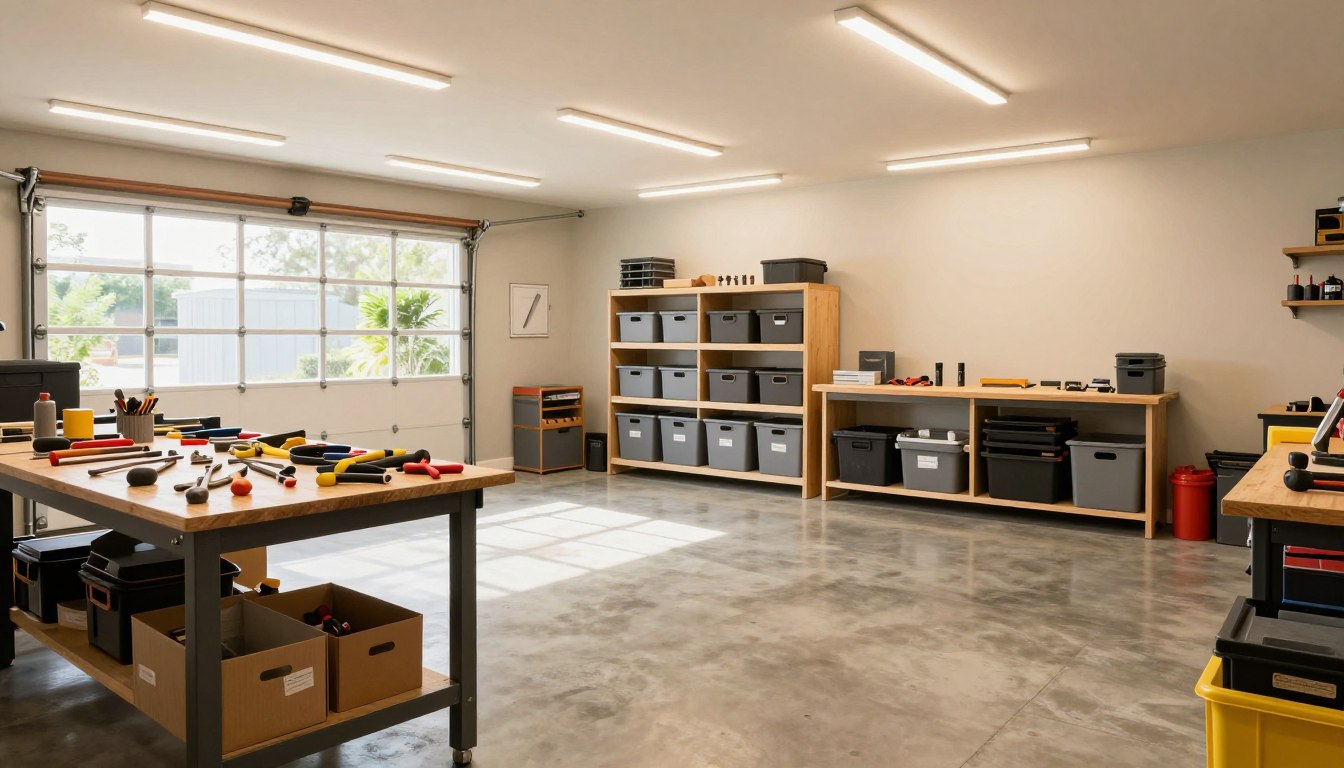
Is your vehicle currently fighting for space against stacks of boxes and forgotten hobby equipment? A functional garage is more than just a place to park; it serves as the backbone of an efficient home. By rethinking your layout, you can reclaim valuable square footage for projects, storage, or even a home gym.
This garage improvement guide offers practical steps to turn clutter into a streamlined sanctuary. We will explore clever garage organization ideas that maximize vertical space and keep your tools within reach. Whether you are planning a full garage makeover or simply looking for fresh garage design ideas, these strategies ensure your space works as hard as you do.
Key Takeaways
- Assess your current storage needs before purchasing new shelving units.
- Utilize wall-mounted systems to clear floor space for easier parking.
- Incorporate bright LED lighting to improve visibility for workshop tasks.
- Group similar items together to maintain long-term order and accessibility.
- Select durable, easy-to-clean flooring options to protect your concrete base.
Your garage improvement guide: Plan a safer, more functional space
A successful garage renovation begins long before the first shelf is installed. By taking the time to evaluate your space, you ensure that your final design meets your specific needs while remaining safe and durable.
Assess the garage’s current condition and daily uses
Identify clutter, moisture, cracks, and electrical concerns
Start by clearing out the space to see what you are truly working with. You must prioritize garage moisture control to prevent long-term damage to your walls and stored items. Check for hairline cracks in the concrete floor and ensure your electrical outlets are grounded and sufficient for your tools.
Following a garage safety checklist is essential during this phase. Look for exposed wiring, tripping hazards, or signs of pests that might have moved into dark corners. Addressing these issues early saves you time and money later in the project.
Separate parking, storage, workshop, and recreation zones
Effective garage storage planning requires you to define clear zones for different activities. If you need to park your car, ensure that area remains clear of permanent fixtures. You can then designate specific walls for storage, a corner for a workbench, or even a small area for fitness equipment.
Create a practical improvement budget and project sequence
Prioritize safety, repairs, and high-impact upgrades
When setting your garage renovation budget, always allocate funds for structural repairs first. Safety upgrades, such as fire-rated drywall or improved lighting, should take precedence over aesthetic choices. Once the foundation is secure, you can focus on high-impact upgrades like epoxy flooring or custom cabinetry.
Measure walls, ceilings, doors, and available floor space
Accurate measurements are the backbone of effective garage workspace planning. Use a laser measure to capture the exact dimensions of your walls, ceiling height, and door clearance. Having these numbers ready will prevent costly mistakes when purchasing materials or pre-fabricated storage units.
| Project Phase | Priority Level | Estimated Impact |
|---|---|---|
| Safety & Repairs | High | Essential for longevity |
| Electrical & Lighting | Medium | Improves daily usability |
| Storage & Organization | Medium | Maximizes floor space |
| Aesthetic Finishes | Low | Enhances visual appeal |
Upgrade storage, organization, lighting, and work areas
A well-organized garage serves as the backbone of a functional home, blending utility with smart design. By implementing effective garage storage solutions, you can turn a cluttered area into a streamlined environment that supports your daily activities.
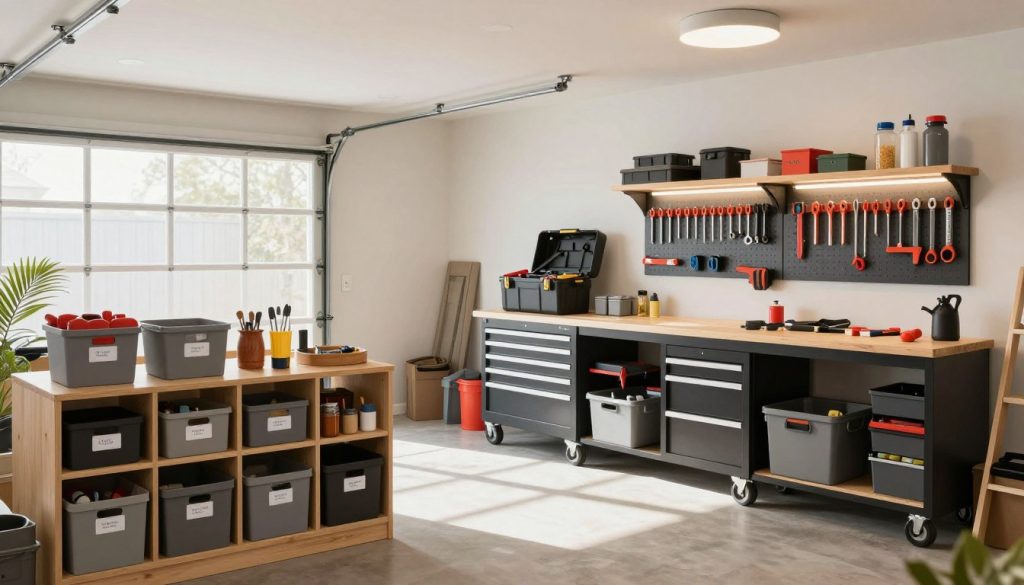
Use vertical storage to reclaim valuable floor space
Install wall-mounted shelves, cabinets, and slatwall panels
The most efficient way to clear your floor is to move items onto the walls. Wall-mounted garage shelves provide heavy-duty support for bulky items, while slatwall panels offer unmatched flexibility for hanging tools and sports gear.
Store seasonal items in labeled overhead bins
Utilizing overhead garage storage is a game-changer for items you rarely use. Place holiday decorations or camping gear in clear, labeled bins to keep them out of the way until you need them.
Build an organized system for tools and small supplies
Arrange pegboards, tool chests, and magnetic strips by frequency of use
Effective garage tool organization relies on keeping your most-used items within arm’s reach. Use magnetic strips for metal hand tools and pegboards for frequently grabbed items like hammers and wrenches.
Group fasteners, hardware, automotive supplies, and gardening equipment
Categorizing your supplies prevents the frustration of searching for lost parts. Keep hardware in small, transparent drawers and group gardening tools together to maintain a clean, logical flow in your workspace.
Improve garage lighting and electrical access
Combine bright overhead LED fixtures with task lighting
Good garage lighting ideas involve layering different light sources to eliminate dark corners. Bright LED shop lights provide general illumination, while focused task lighting over your workbench ensures precision during detailed projects.
Plan outlets, extension-cord storage, and circuit capacity safely
Smart garage electrical upgrades prioritize safety and convenience. Ensure your circuits can handle the load of your power tools and always use wall-mounted cord reels to keep walkways free of tripping hazards.
Create a comfortable and durable project zone
Choose a sturdy workbench and an easy-to-clean surface
A high-quality garage workbench acts as the heart of your workshop. Look for surfaces that resist oil and chemical spills, making it easy to wipe down after a messy project.
Add anti-fatigue mats, ventilation, and weather-resistant finishes
If you are looking for garage workshop ideas, consider comfort as a priority. Anti-fatigue mats reduce strain during long hours of work, while proper ventilation keeps the air fresh and safe.
Make the garage easier to maintain and use
Keep walkways, vehicle doors, and emergency exits clear
Maintaining a clear path is essential for both safety and efficiency. Always ensure that your vehicle doors and emergency exits remain unobstructed, even when the garage is fully stocked.
Use labeled containers and a simple reset routine
Consistency is the key to long-term success. By using clear labels and committing to a simple five-minute reset routine at the end of each project, you ensure your garage stays organized for years to come.
Conclusion
A functional space starts with a clear vision and a steady plan. By combining safety measures with smart storage, you turn a cluttered area into a productive hub for your home.
Focusing on clear zones and labeled containers helps you maintain an organized garage year-round. These small habits prevent mess from returning after you finish your projects. Consistent garage maintenance tips keep your tools in top shape and your walkways clear of hazards.
Tackle your improvements in a logical sequence to see immediate results. Each step you take makes your daily tasks smoother and more enjoyable. You gain more than just extra room when you commit to these upgrades.
Share your favorite storage hacks or project photos with our community. Your progress inspires others to start their own transformation today. What part of your space will you improve first?